Audio-Reactive Particles
Overview
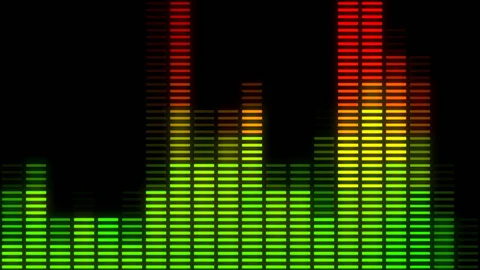
PopcornFX supports audio-reactive particle effects — particles that respond to sound in real time by sampling audio spectrum or waveform data. This is one of PopcornFX's showcase features, enabling effects like music-driven visualizers, bass-pulsing explosions, and beat-synchronized emissions.
In Warcraft 3 Reforged, this feature is non-functional. Audio samplers are present in the engine but return empty data, meaning any baked effect relying on audio.spectrum() or audio.waveform() will silently produce no visual response.
How It Works (in Theory)
PopcornFX's audio sampling pipeline involves three components:
-
CParticleSamplerCPU_Spectrum— the CPU-side sampler that particle scripts reference. Created viaNewFromStatic, it is initialized with a default audio descriptor and set toModeSpectrum. -
CParticleSamplerDescriptor_Audio_Default— the descriptor that performs the actual sampling. ItsSamplemethod retrieves audio data by calling virtual methods onIParticleScene, the host application's scene interface. -
IParticleScene— an interface that the host engine (Warcraft 3) must implement. It exposes two key virtual methods: GetAudioSpectrum(channelGroup, &outBaseCount)— returns FFT spectrum dataGetAudioWaveform(channelGroup, &outBaseCount)— returns raw waveform data
During sampling, the descriptor checks the mode, calls the appropriate method on the scene, and if data is returned, interpolates it (point / linear / cubic filtering) to produce per-particle output values.
Why It Doesn't Work
The IParticleScene base class provides default implementations for both audio methods:
// Pseudocode reconstructed from disassembly
TMemoryView<float const*> IParticleScene::GetAudioSpectrum(CStringId channelGroup, uint* outBaseCount)
{
    *outBaseCount = 0;
    return TMemoryView<float const*>(nullptr, 0); // empty
}

TMemoryView<float const*> IParticleScene::GetAudioWaveform(CStringId channelGroup, uint* outBaseCount)
{
    *outBaseCount = 0;
    return TMemoryView<float const*>(nullptr, 0); // empty
}
Blizzard's scene class inherits from IParticleScene but does not override these methods. As a result:
GetAudioSpectrum/GetAudioWaveformalways return an empty memory viewSampledetects the empty view and returnsfalse- The particle system receives no audio data — all spectrum/waveform reads evaluate to zero
The default descriptor also hardcodes the channel group name to "Master", but this is irrelevant since the data retrieval never reaches a point where the channel name matters.
Confirmation
This was confirmed through static analysis of the Warcraft 3 Reforged binary. The base IParticleScene default implementations are the only versions present — no overrides exist in the Blizzard-side code that would connect the game's audio engine (FMOD) to PopcornFX's sampling interface.
The same pattern applies to GetDynamicStates, another IParticleScene method where the default implementation simply clears all output states without providing real physics data.
Impact
Any PopcornFX effect that uses audio attribute samplers will compile and load without errors but produce no audio-reactive behavior at runtime. The particles will render, but all audio-driven properties (scale, color, velocity, emission rate, etc.) will evaluate to zero or their default fallback values.